
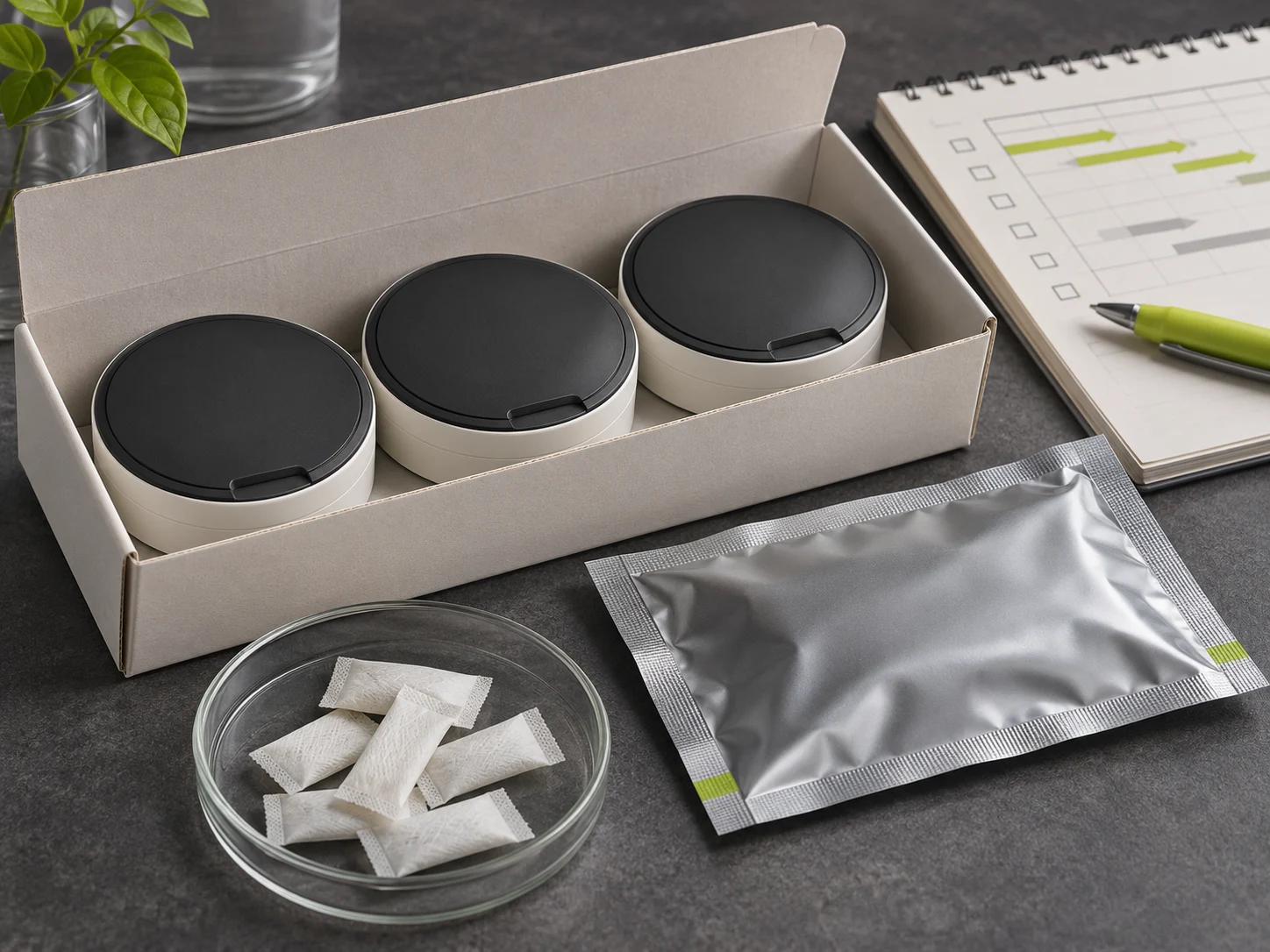
A shelf-life claim concerns a product in a defined pack under stated conditions. Testing an unpacked blend or storing a few sample cans for a short period answers a narrower question. The stability plan should make that distinction clear before samples are placed on study.
Identify the complete system
Record formula revision, raw-material lots, contact bag, seam, fill condition, retail can, closure, liner and any additional barrier. Include artwork or variable-data features when they matter to readability or handling. A component change can affect the assembled system even if each item has its own supplier specification.
For a can with a secondary compartment or a hinged closure, describe the intended opening pattern and the surfaces exposed during use. Evaluate the actual design; a similar-looking can from another generation of a mainstream brand is not an equivalent test article.
Choose endpoints from the product questions
The relevant endpoints may include caffeine and other ingredient content, sensory changes, caking, color, odor, moisture behavior, pouch integrity and applicable microbiological checks. Define methods, sample quantities and acceptance criteria against a justified project basis.
- Use consistent sample identity and conditioning.
- Retain the method version and reporting units.
- Plan how a result outside criteria is investigated.
- Record which endpoints are exploratory and which inform approval.
Distinguish real-time and accelerated work
Real-time data describe the conditions and duration observed. Accelerated studies can help explore change and compare options, but extrapolation needs a justified relationship to the actual product. A short high-temperature observation cannot automatically be converted into a universal expiry date.
Record the conditions and timepoints in the report. If a study is ongoing, state the data available at the review date and the decisions those data can support. Keep future timepoints open until results exist.
Plan the after-opening question separately
The environment inside an unopened pack may differ from a can that is opened repeatedly. If the proposed consumer presentation makes after-opening behavior relevant, define the opening cycle, storage and handling conditions. Do not hide that question inside a general statement that the container has a moisture barrier.
Assess closure integrity and the complete barrier system. A material transmission value on a supplier sheet does not by itself establish the performance of an assembled pack with a specific closure and liner.
Control changes after approval
Name the party that reviews a change to extract source, sweetener, flavor, pouch fabric or can. Decide whether the change needs a compatibility comparison, analytical check or additional stability work. Preserve the original study identity so new material is not represented as having the old product’s data.
Keep the proposed storage statement, labeled period and supporting evidence aligned. The approved decision should identify its product and pack version, date and responsible reviewer. A general guide or a concept photograph cannot provide that approval.
A procurement question
Should packaging be finalized before stability work starts?
Early screening can compare options, but a shelf-life decision needs evidence relevant to the final formula and pack. Clearly identify screening studies and confirm how a later pack change affects the plan.
References
Prepared by the CaffeinePouch OEM editorial team. Technical sourcing guidance, updated 3 November 2026. Illustrative examples are not a product specification, a dose recommendation or a finished-product test result.
Send your project brief or review the specification worksheet.