
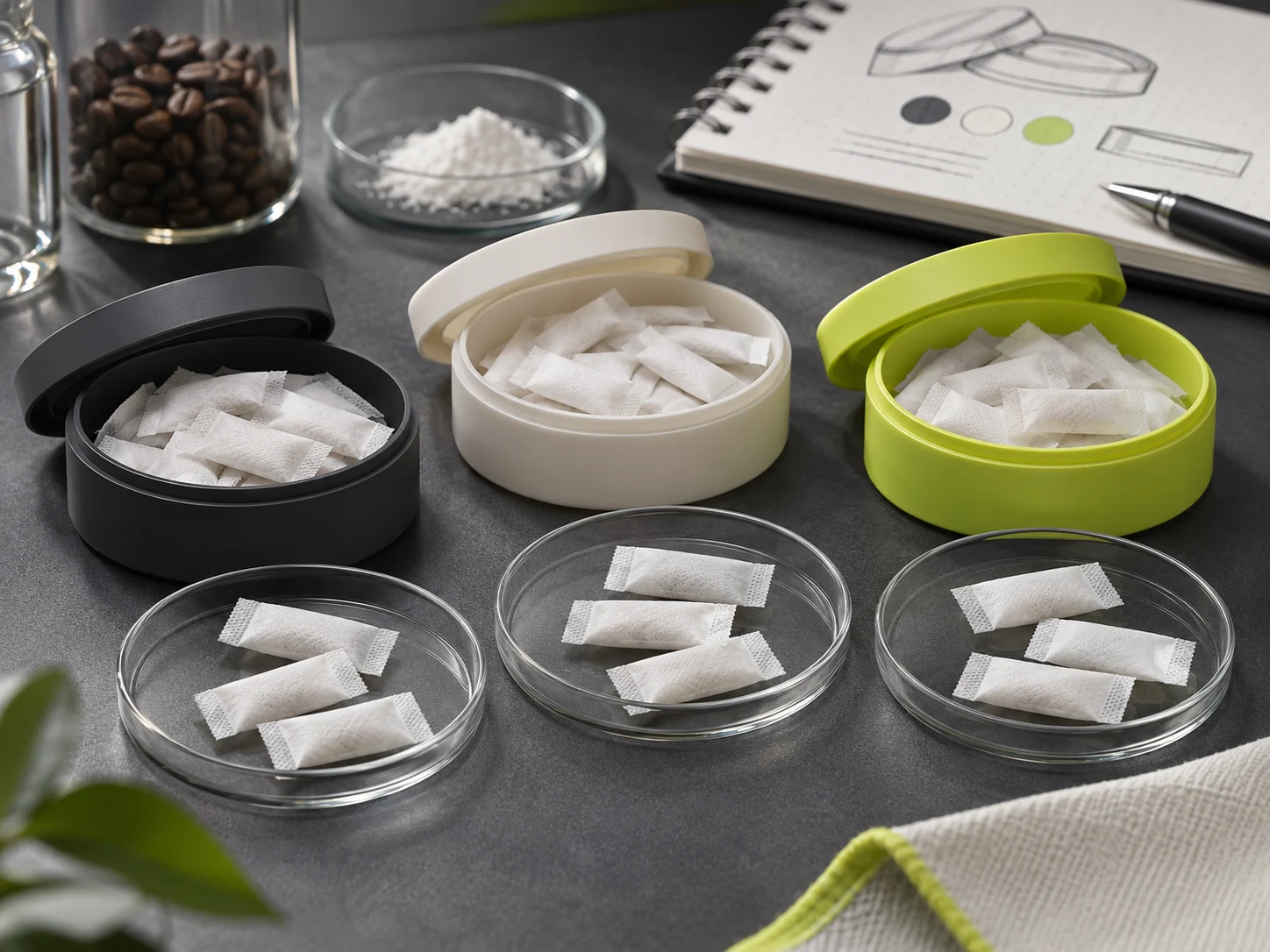
How to evaluate caffeine pouch samples
Write the decision before comparing samples. If you want to compare flavor, keep formula, caffeine content, pouch and pack consistent where possible. If multiple variables changed, record them so feedback can be interpreted.
Use a consistent feedback sheet
| Field | What to record |
|---|---|
| Identity | Concept ID, formula revision, lot, pouch and pack |
| Aroma | Named character, intensity and unwanted notes |
| Taste | Bitterness, sweetness, acidity and aftertaste |
| Cooling | Intensity and character separately from mint identity |
| Caffeine pouch mouthfeel | Fabric feel, fill texture, seam and handling observations |
| Pack | Opening, closure, label readability and leakage |
| Condition | Storage, date and agreed evaluation method |
Separate feedback from test evidence
A sensory preference cannot establish caffeine content or batch uniformity. An assay cannot describe pouch comfort. Use the appropriate records for each question, with product-specific evaluation instructions and suitable participants.
Close the sample round
Describe what changed, what improved, what remains unresolved and the next comparison. Preserve the previous version instead of overwriting it. Sample acceptance should state whether it approves only a sensory direction or a wider specification.
Project questions
What should I send for this review?
Send the target market, formula and pack version, the question you need answered and existing documents. Identify which values are proposed and which have already been approved.
Does this guide define an approved product specification?
No. Use the guide to prepare a project-specific review. Methods, acceptance criteria and responsibilities are agreed for the actual formulation, pack and market.