
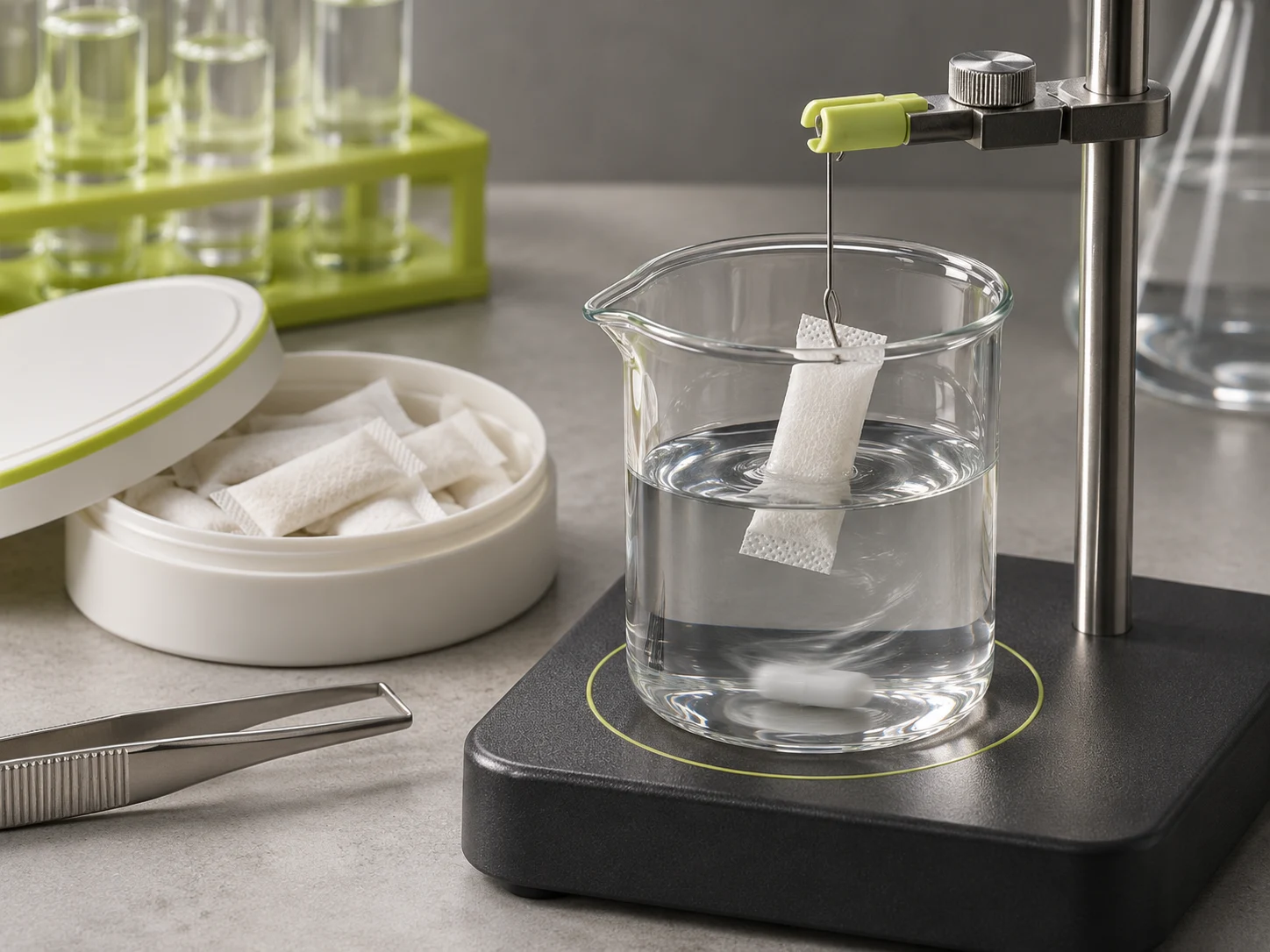
Caffeine pouch release testing
An in vitro release method can compare formulations or materials under defined conditions. It needs a question: compare two seams, evaluate a material change or track a manufacturing variation. A curve without conditions is difficult to interpret.
Write the protocol
- Define medium, volume, pH and temperature.
- Record agitation, apparatus and contact conditions.
- Choose sampling times, sample replacement and analytical method.
- State sample count, calculation basis and variability.
- Identify the exact formula, pouch, lot and storage condition.
Read a curve within its scope
The result describes release in that apparatus and medium. It does not independently establish human absorption, onset, duration, bioavailability or safety. Different protocols can produce different results; compare within a justified method.
Plan a development comparison
Retain raw data and a full method version. If changing material and formula at the same time, acknowledge that the study cannot isolate one cause. Confirm method suitability and a relevant specification before using a release result for a production decision.
Project questions
What should I send for this review?
Send the target market, formula and pack version, the question you need answered and existing documents. Identify which values are proposed and which have already been approved.
Does this guide define an approved product specification?
No. Use the guide to prepare a project-specific review. Methods, acceptance criteria and responsibilities are agreed for the actual formulation, pack and market.