
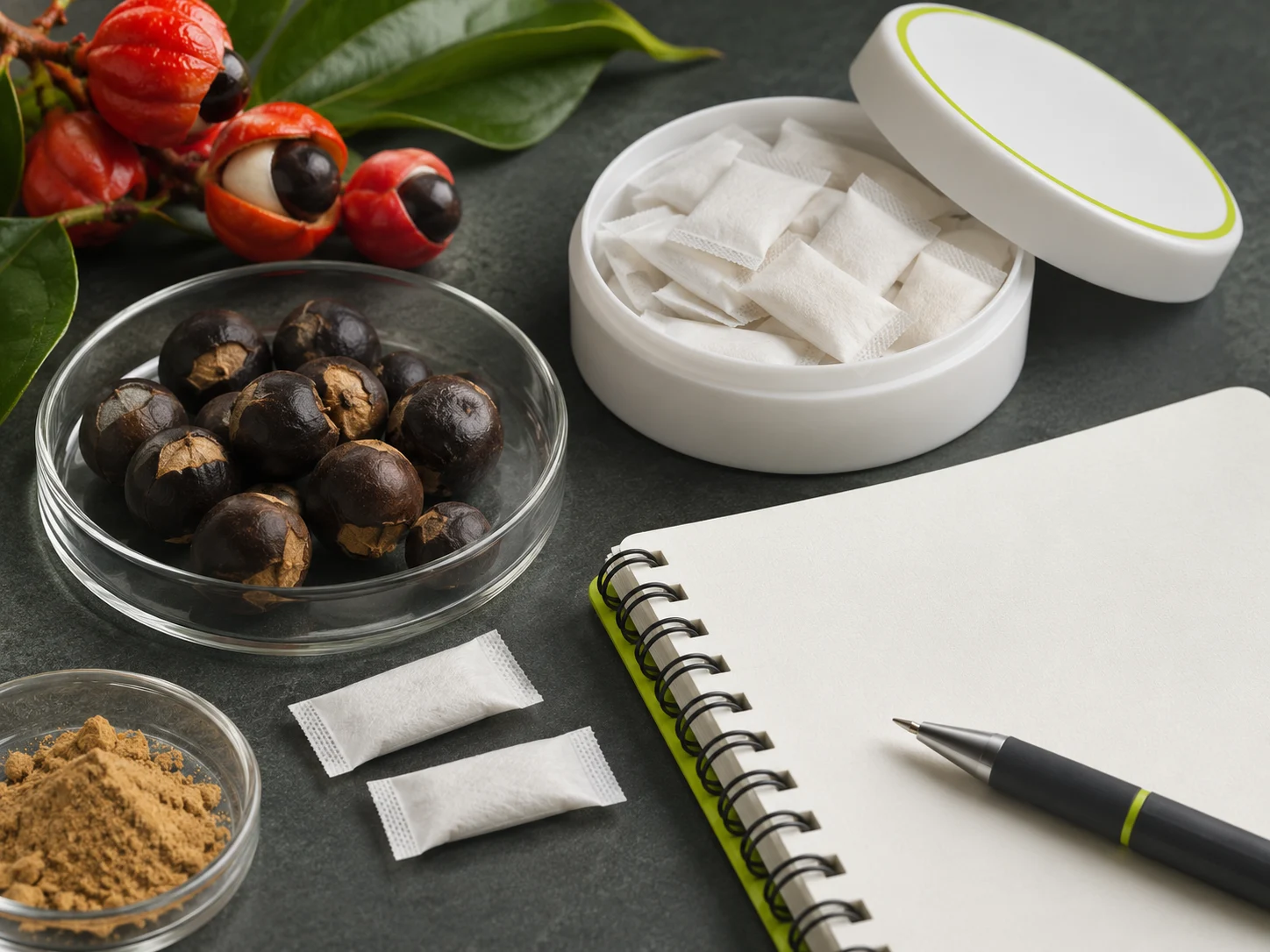
Guarana extract caffeine content
The extract name and mass do not establish caffeine content. Obtain the lot assay, its basis and the extraction specification. Include caffeine from coffee, tea, added caffeine and every other contributing material.
A transparent calculation
Illustrative arithmetic only: 100 mg of an extract assayed at 10% caffeine contributes 10 mg of theoretical caffeine. Adding 20 mg of pure caffeine gives a theoretical total of 30 mg before applicable purity, moisture and manufacturing adjustments. These values are not a proposed formula or a recommended dose.
| Term | Calculation |
|---|---|
| Contribution of one material | Material mass × caffeine mass fraction |
| Theoretical total | Sum of all material contributions |
| Finished-pouch result | Measured with a suitable method and defined sampling |
Keep units and bases aligned
Convert percentages to fractions and avoid treating extract mg as caffeine mg. Where an assay is on a dry basis, account for the material basis used in weighing. A raw-material change may require the calculation, blend plan and specification to be reviewed.
Use analysis to close the loop
Test the finished matrix where required and investigate differences from the theoretical result. Keep raw-material lots, formula version, fill weight and sample identity linked. Do not infer a slow-release or four-hour effect from the word guarana.
Project questions
What should I send for this review?
Send the target market, formula and pack version, the question you need answered and existing documents. Identify which values are proposed and which have already been approved.
Does this guide define an approved product specification?
No. Use the guide to prepare a project-specific review. Methods, acceptance criteria and responsibilities are agreed for the actual formulation, pack and market.